


The Science of Sports Medicine
The Science of Sports Medicine
Every athlete, from beginners to professionals, experiences the physical demands of training and competition. Whether it’s a soccer player sprinting down the field, a golfer perfecting a swing, or a runner preparing for a marathon, the human body is constantly adapting to movement. The field of sports medicine combines biology, physics, medicine, and technology to understand how the body performs at its best while preventing and treating injuries.
What Is Sports Medicine?
Sports medicine is a branch of medicine focused on helping people stay active, recover from injuries, and improve physical performance. Despite its name, sports medicine is not limited to professional athletes. Physicians, physical therapists, athletic trainers, nutritionists, and exercise physiologists work with people of all ages from young students playing school sports to older adults trying to stay healthy.
The main goals of sports medicine are to:
- Prevent injuries before they happen.
- Diagnose injuries accurately.
- Help athletes recover safely.
- Improve performance through science.
- Promote lifelong physical activity.
The Human Body in Motion
Every movement begins with the musculoskeletal system. Bones provide structure, muscles generate force, tendons connect muscles to bones, and ligaments stabilize joints.
When an athlete runs, muscles contract because nerve signals trigger tiny protein fibers called actin and myosin to slide past one another. This microscopic process converts chemical energy stored in ATP (adenosine triphosphate) into mechanical movement.
The cardiovascular system also plays a critical role. As exercise intensity increases:
- Heart rate rises.
- Blood vessels widen.
- Oxygen delivery to muscles increases.
- Carbon dioxide and waste products are removed more efficiently.
These adaptations allow athletes to perform longer and recover faster.
Why Injuries Happen
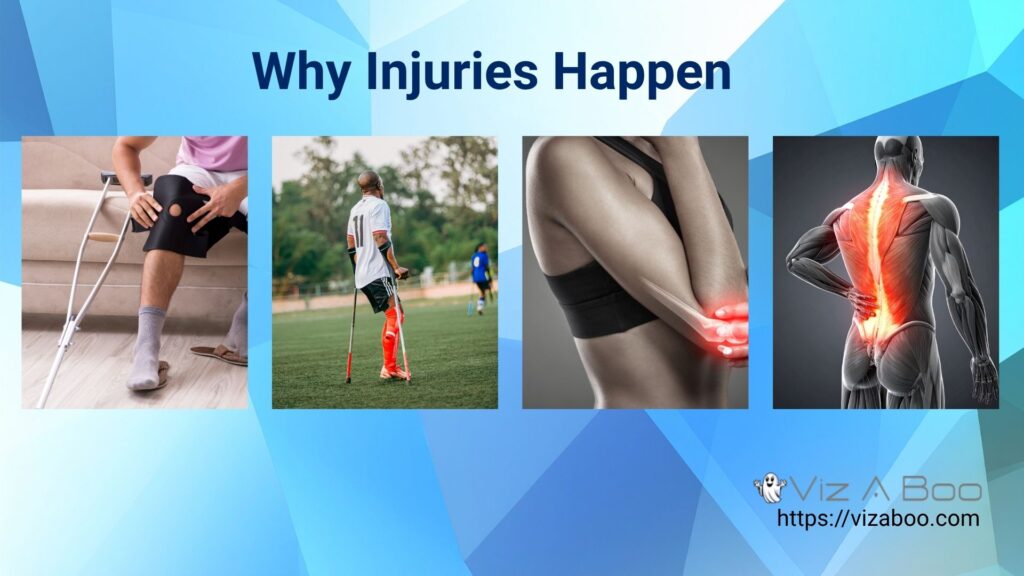
Sports injuries usually occur when the body experiences more stress than it can tolerate. Injuries fall into two main categories:
Acute injuries happen suddenly. Examples include ankle sprains, fractures, shoulder dislocations, and concussions.
Overuse injuries develop gradually after repetitive stress. Common examples include:
- Stress fractures
- Shin splints
- Tennis elbow
- Rotator cuff injuries
- Patellar tendinitis (“jumper’s knee”)
Many injuries result from a combination of poor technique, muscle imbalances, inadequate recovery, and excessive training volume.
The Biology of Healing
After an injury, the body immediately begins repairing itself.
Phase 1: Inflammation (0–5 days)
Blood vessels expand, allowing immune cells to reach the injured area quickly. Swelling, redness, and pain are common during this stage, but these responses are essential because they remove damaged tissue and begin the healing process.
Phase 2: Repair (5 days–6 weeks)
Fibroblasts produce collagen, the protein that forms new connective tissue. New blood vessels develop, damaged muscle fibers begin to regenerate, and the injured area gradually becomes stronger. Physical therapy often begins during this stage to restore movement without causing further damage.
Phase 3: Remodeling (Weeks to Months)
The newly formed collagen fibers reorganize and align with the direction of normal movement, making the tissue stronger and more flexible. Athletes slowly return to full activity through carefully monitored rehabilitation. Returning to sports too early can interrupt this process and greatly increase the risk of reinjury.
How to Prevent Sports Injuries
Although not every injury can be avoided, many can be prevented through proper preparation and healthy habits. One of the most effective methods is performing a dynamic warm-up before exercise. Warming up increases blood flow to the muscles, improves flexibility, and prepares the body for physical activity.
Strength training also plays an important role by building muscles that support joints and improve stability. Stronger muscles help absorb forces placed on the body during running, jumping, and changing direction.
Rest and recovery are just as important as training. Muscles need time to repair after exercise, and overtraining can lead to fatigue and overuse injuries. Getting enough sleep and scheduling rest days allows the body to recover properly.
Proper nutrition and hydration provide the body with the energy and nutrients needed to perform and heal. Drinking enough water helps regulate body temperature and muscle function, while eating a balanced diet rich in carbohydrates, protein, healthy fats, vitamins, and minerals supports recovery and growth.
Finally, using proper technique and wearing well-fitting protective equipment greatly reduce the risk of injury. Coaches, athletic trainers, and sports medicine professionals can help athletes improve movement patterns and identify potential problems before they become serious injuries.
Conclusion
Sports medicine is much more than treating injured athletes it is the science of helping people move safely, perform at their best, and stay healthy throughout their lives. By understanding how the body moves, why injuries occur, and how the healing process works, athletes and healthcare professionals can make smarter decisions about training and recovery. As research continues to advance, sports medicine will remain an essential field that combines biology, medicine, and human performance to keep people active and healthy for years to come.

Leave a Reply