


Astro Link: Interplanetary Connectivity, Simplified
A Innovation Project by Ice and Viz
We are excited to present Astro Link, a breakthrough concept designed to solve one of the biggest barriers in human space exploration: how to efficiently power long-distance travel between Earth and Mars.
The Problem:
Current rockets must carry all their fuel at launch.
This creates major challenges:
- Heavy payloads reduce speed
- Higher costs and higher risk
- Limited range and flexibility
- No refueling option once past Earth orbit
Without an in-space energy solution, deep-space missions remain limited, slow, and extremely expensive.
Design Thinking Methodology:
We followed Design Thinking Methodology, it is basically a “superpower” for solving problems. Instead of just guessing an answer, it’s a 6-step cycle that helps you build things people actually want to use.
Think of it as a loop where you’re allowed to experiment, fail, and get better every time. Here’s how it works for you:
Approach:
Here is the breakdown:
- Understand the Problem
- Try out Solutions/Game Plan
- Prototype
- 3D Model
- Architecture
- Reality check of the solution
- Improve/Show it off
Design Thinking isn’t a straight line—it’s a circle. You’ll often “loop back” to an earlier step when you learn something new. It’s all about staying curious and putting the person you’re helping first!
1. Detailed Breakdown of Solution:
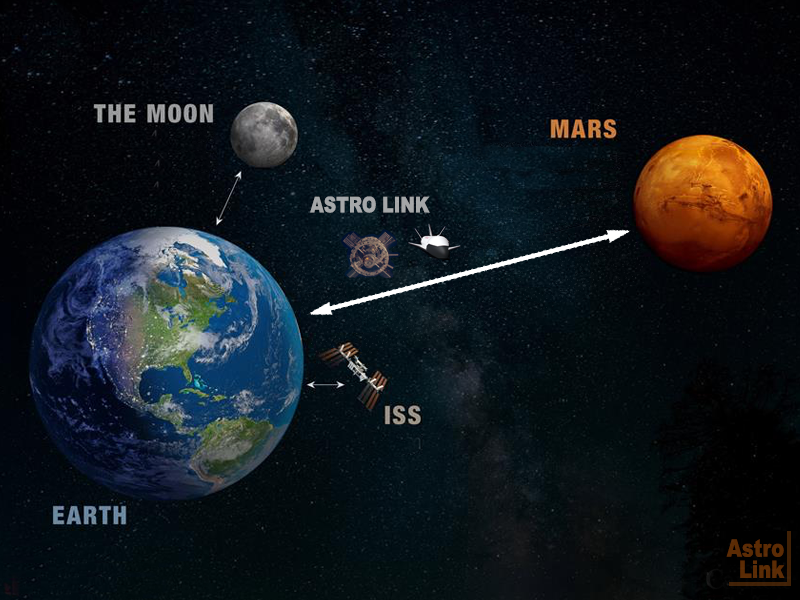
Astro Link is a deep-space fueling and energy station positioned just beyond Earth’s orbit. It serves as a stable, reliable waypoint where rockets can refuel and recharge before beginning the long journey to Mars.
2. Detail Video Explanation about the Mission:
Astro Link is a deep-space fueling and energy station positioned just beyond Earth’s orbit. It serves as a stable, reliable waypoint where rockets can refuel and recharge before beginning the long journey to Mars.
3. Prototype of “Astro Link Project”:
This is the “no bad ideas” zone. Sketch everything, research what others have done, and come up with as many wild ideas as possible. Then, pick the best 2 or 3 that actually seem doable.
Draw a diagram or a storyboard. Figure out what supplies you need (like cardboard, code, or apps) and who on your team is doing what. The goal is to plan the “MVP”—the simplest version of your idea that still works.
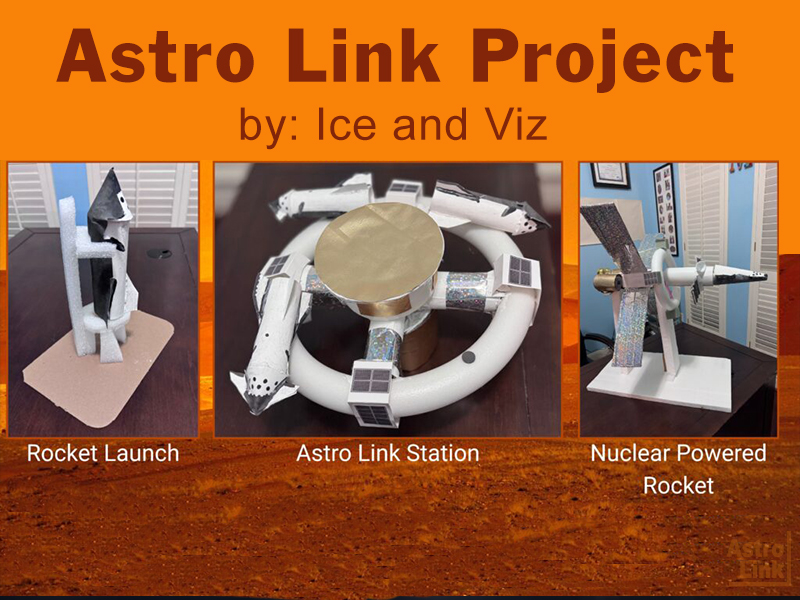
- 3.1. Rocket Launch
- 3.2. Astro Link Station
- 3.3. Nuclear Powered Rocket


3D Model Design of “Astro Link”:
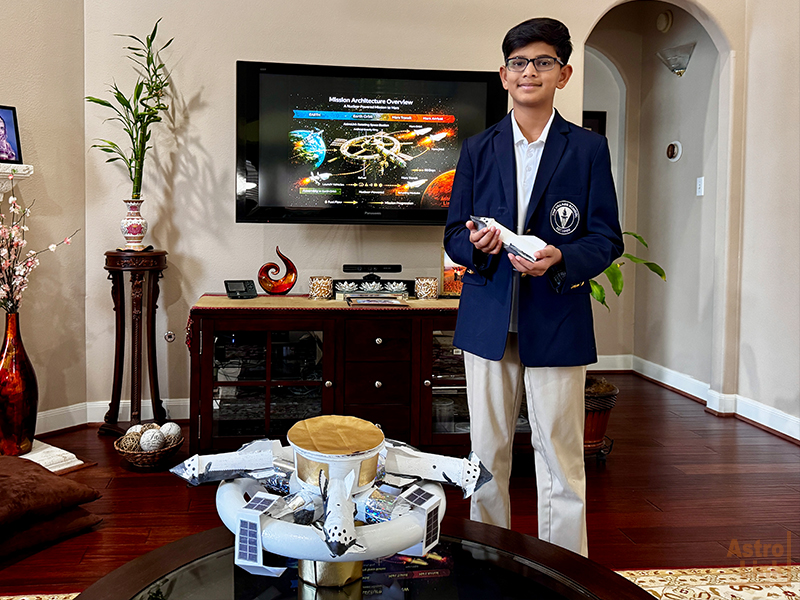
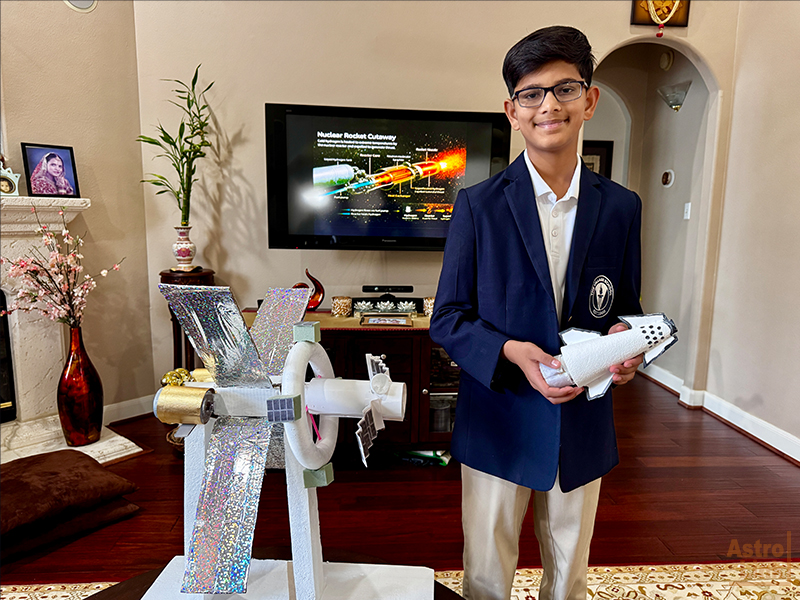
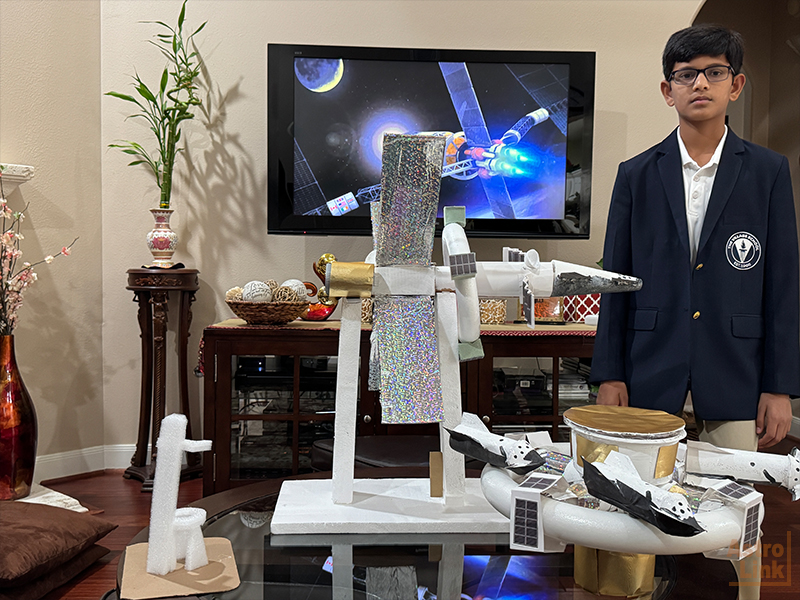
Make a prototype! It doesn’t have to be perfect or pretty; it just has to work well enough to test. It’s a tool for learning, not a final masterpiece. Here you can see the 3D models for the designs of three areas of the project.
1.1. Rocket Launch
1.2. Astro Link Station
1.3. Nuclear Powered Rocket
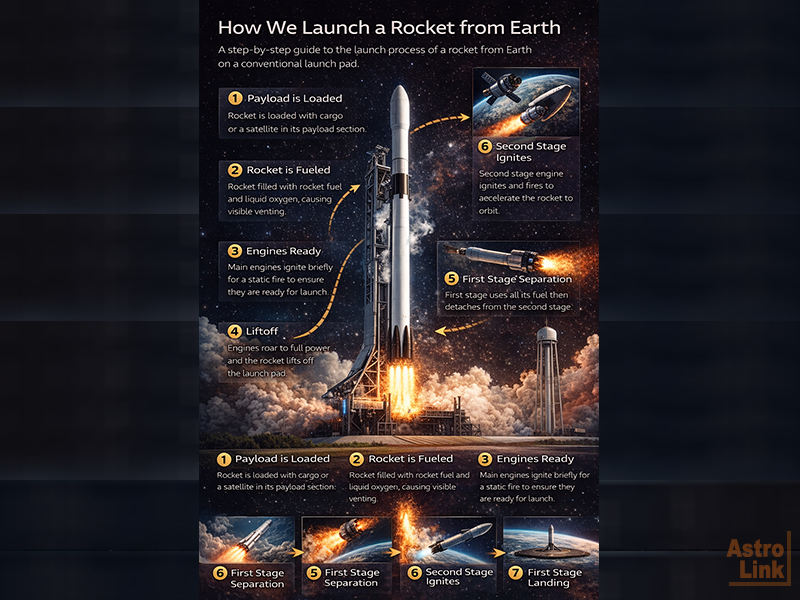
3.1. Rocket Launch (Earth → Orbit)
Rockets launch from Earth carrying minimal fuel and payload. The goal is to safely place spacecraft into Earth’s orbit while reducing fuel weight and launch costs.
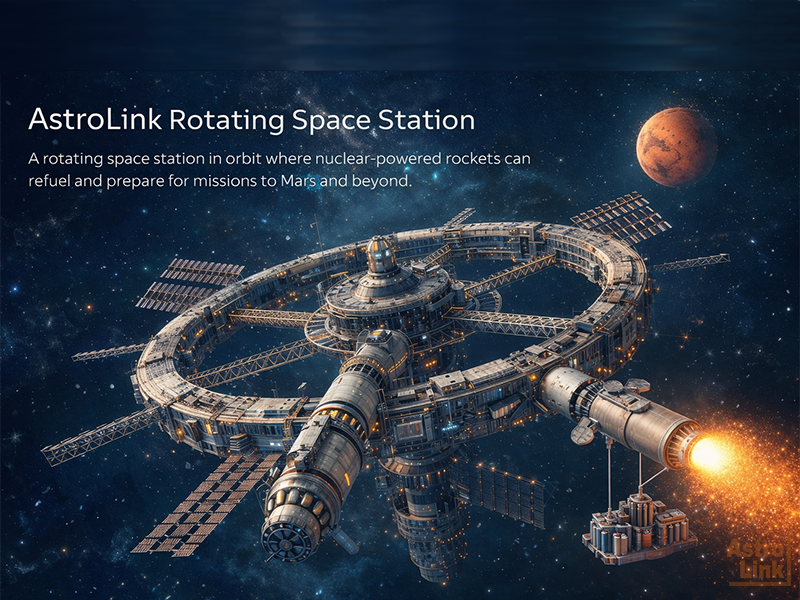
3.2. Astro Link Station (Orbital Nuclear Fueling Hub)
The AstroLink Station operates in Earth’s orbit as a nuclear-powered fueling and energy station. Spacecraft dock at the station to refuel and recharge using nuclear energy, preparing them for long-distance space travel.
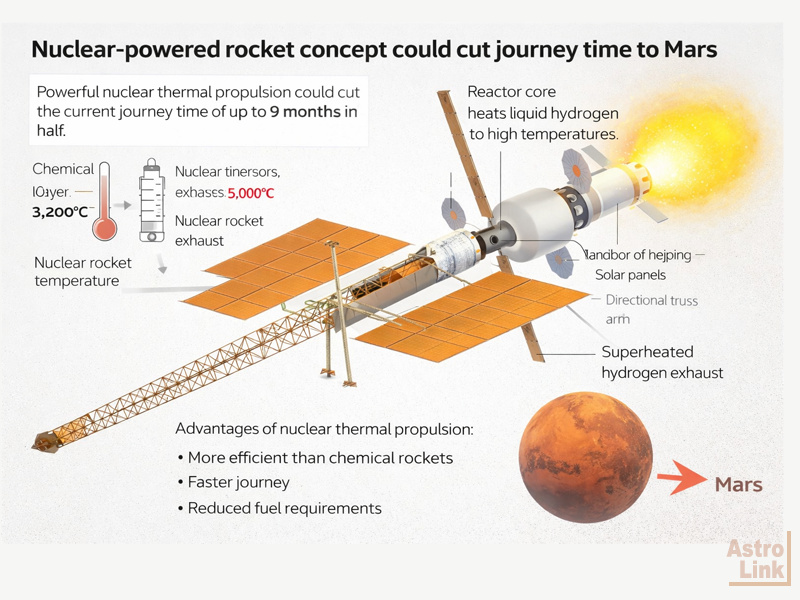
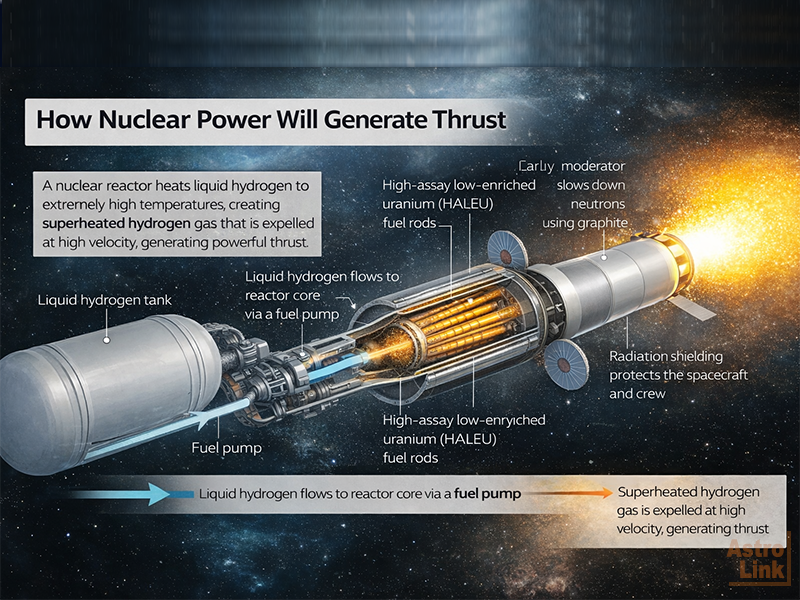
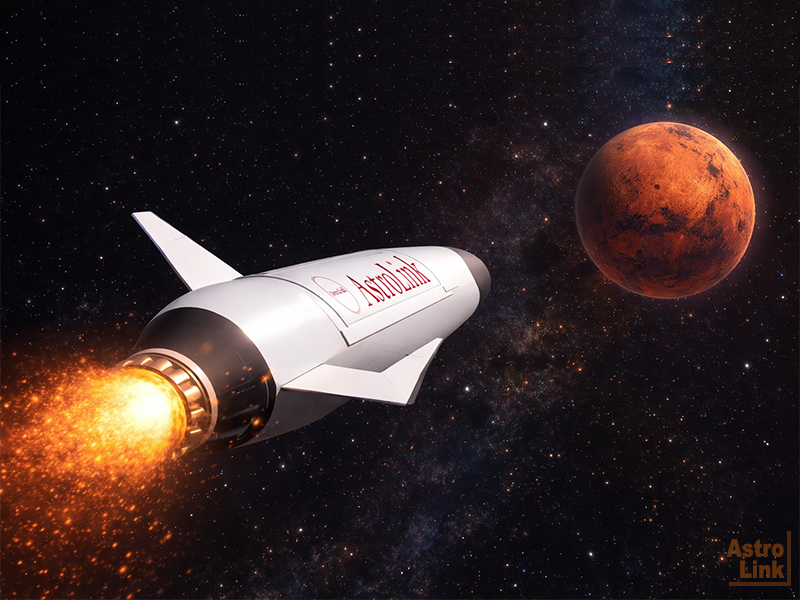
3.3. Nuclear Powered Rocket(Deep Space Travel)
After refueling, rockets use nuclear energy–based propulsion to travel efficiently through deep space, enabling faster, longer, and more sustainable missions to destinations such as Mars and beyond.
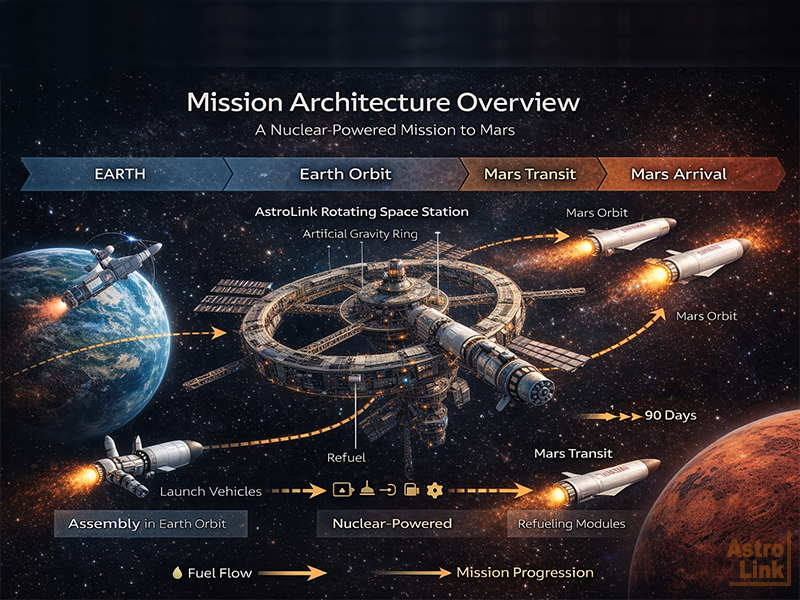
4. Astro Link’s Mission “Architecture”:
Purpose:
Show the major components and how they connect.
Technical Engineering Description:
AstroLink is an interplanetary logistics node engineered around a high-specific-impulse nuclear-electric propulsion system, a redundant GN&C autonomous rendezvous suite, modular refuel-compatible cryogenic storage tanks, and a multi-port docking matrix positioned in a resonant Earth–Mars cycling orbit to enable continuous transport, orbital energy staging, thermal-managed propellant transfer, and low-cost mass distribution for sustained Mars mission architecture.
Key Innovations:
. Mid-space refueling platform—a concept rarely explored but critical for long-range space travel.
. Hybrid nuclear-solar energy system optimized for space environments.
. Reduced launch mass → improved mission feasibility.
. Faster travel to Mars → enabling future crewed missions and cargo transport.
. Sustainable design suitable for long-term interplanetary infrastructure.
Sections:
2.1. Earth orbit
- Launch vehicles
- Payload assembly
2.2. AstroLink Rotating Space Station
- Artificial gravity ring
- Nuclear core reactor
- Docking ports
2.3. Nuclear-Powered Rockets
- Refueling modules
- Mars transfer module
2.4. Mars Arrival
- Entry / landing modules
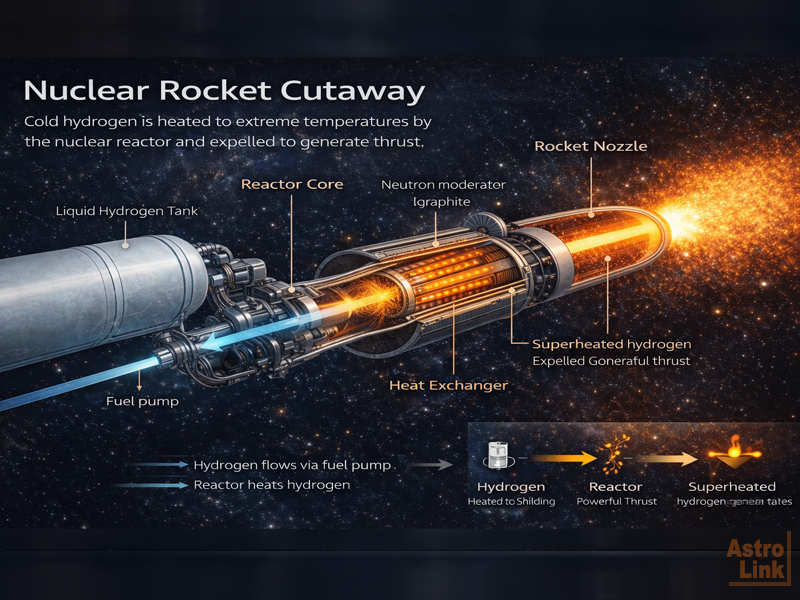
5. Propulsion Cutaway Diagram:
Purpose:
Explain how the nuclear thermal rocket produces thrust.
Cutaway Sections:
5.1. NUCLEAR REACTOR CORE
- Fuel rods
- Radiation shielding
5.2. Hydrogen Tanks
5.3. Heat Exchanger
5.4. Nozzle & Exhaust
Annotations:
- Hydrogen enters → heated by core → high-speed exhaust
- Temperature & pressure paths
- Thrust generation explanation
6. Rotation & Artificial Gravity:
Purpose:
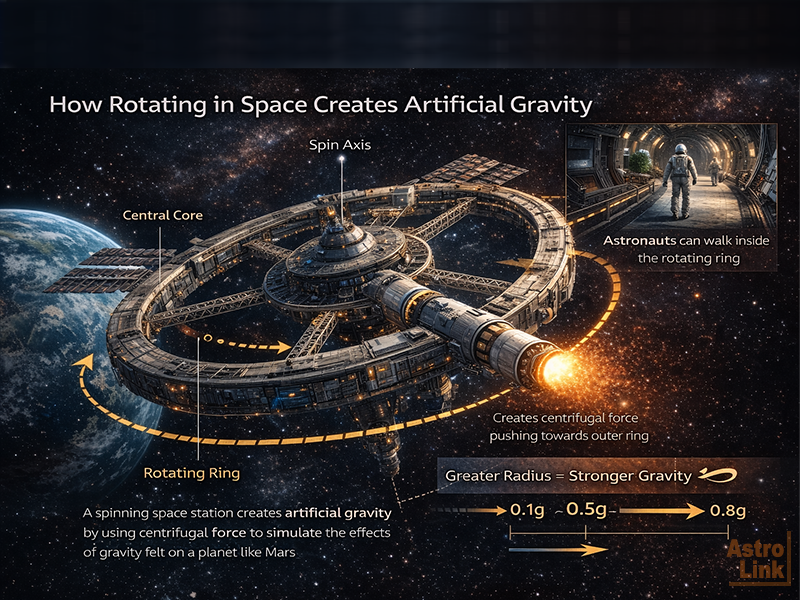
Visualize how the station spins to create gravity.
Technical Description:
AstroLink is a groundbreaking orbital port designed to revolutionize how humanity travels between Earth and Mars. Today, missions to Mars take months, cost billions, and rely on single-use spacecraft that disappear after one journey. Without consistent transportation or infrastructure, sustained exploration and development across planets remain out of reach.
Key Components:
6.1. OUTER RING (HABITAT AREAS)
6.2. CENTRAL NUCLEAR CORE
6.3. SPIN AXIS
6.4. RADIUS – CENTRIFUGAL FORCE DIAGRAM
Add:
- Gravity scale markers: 0.5g, 0.8g
- Crew zones & living modules
7. Mission Timeline Diagram:
Purpose:
A horizontal timeline showing phases.
Earth Assembly → Earth Orbit → Dock w/ AstroLink → Refuel Rockets → Mars Transit → Mars Orbit → Landing
8. Why Astro Link Matters
Based on the vision behind AstroLink’s push for interplanetary travel, the reasons we should venture into nuclear-based rocketry boil down to speed, safety, and survival.
While chemical rockets (like those we use today) are the “horses” of the space age—reliable but slow—nuclear rockets are the “jets.” Here is why AstroLink and this technology matter for our future:
8.1. Slashing Travel Time (The “Speed” Factor)
Current chemical rockets take about 7 to 9 months to reach Mars. A nuclear thermal rocket could potentially cut that journey down to 3 to 4 months, and some advanced “bimodal” designs aim for as little as 45 days.
- Why it matters: In space, time is your greatest enemy. Every extra day in transit is another day you have to carry food, water, and oxygen.
8.2. Protecting the Human Body (The “Safety” Factor)
Space is a high-radiation environment. The longer astronauts are floating in a tin can between planets, the more they are bombarded by cosmic rays that can cause cancer and brain damage.
- The Paradox: Even though the engine is “nuclear,” the total radiation dose an astronaut receives is actually lower because they spend significantly less time exposed to the harsh radiation of deep space.
- Zero Gravity: Long-term weightlessness causes bone density loss and muscle atrophy. Cutting travel time keeps our explorers healthy enough to actually walk on Mars when they arrive.
8.3. More “Bang for Your Buck” (The “Efficiency” Factor)
Nuclear fuel is millions of times more energy-dense than chemical fuel.
- Payload Capacity: Because you don’t have to fill 90% of your rocket with heavy chemical fuel, you can use that extra weight to carry more science equipment, better living quarters, or tools to build the first Martian base.
- Flexibility: Chemical rockets have to wait for “launch windows” (when Earth and Mars are perfectly aligned) every 26 months. Nuclear rockets are powerful enough to “brute force” the physics, allowing us to launch more often and take shorter paths.
8.4. AstroLink’s Role: The Interplanetary Connection
AstroLink represents the infrastructure of this new era. Just as a bridge is useless without a road, a rocket is useless without a communication and logistical link.
- Bridging the Gap: AstroLink matters because it provides the “Link” in the bio of our species. If we are going to have people living on Mars, we need a seamless, high-speed way to connect their data, their stories, and their lives back to Earth.
Summary: We build nuclear rockets because they make the solar system small enough to explore. We need AstroLink because it makes that exploration feel like home. By combining the two, Mars stops being a distant “dot” and starts being our next neighborhood.
9. Thanks to The Village School (Dr. Villinski) :
This project would not have been possible without the invaluable mentorship of Dr. Villinski, a science teacher at The Village School. We would like to extend our deepest gratitude for his dedicated guidance and continued support in encouraging young minds to push the boundaries of scientific exploration. His passion for teaching and commitment to his students have been instrumental in helping Viz Venkatesh articulate and refine the vision for the Mars “Astro Link” project. By fostering an environment where curiosity meets rigorous thinking, Dr. Villinski has empowered the next generation of explorers to dream of a connected future across the stars.
